
Natolin: The Romantic Palace and Forest Park in South Warsaw
The essentials: Natolin is a palace-and-park ensemble in south Warsaw that the City of Warsaw counts among Poland's most valuable Romantic complexes of its kind. Once a royal hunting ground and pheasantry, it became a summer residence in 1780 and took its present name from Natalia Potocka, born in 1807. The park, crossed by the Vistula escarpment, includes a nature reserve and is administered by the Natolin European Centre Foundation - home to the College of Europe campus - with sightseeing in organised guided groups.
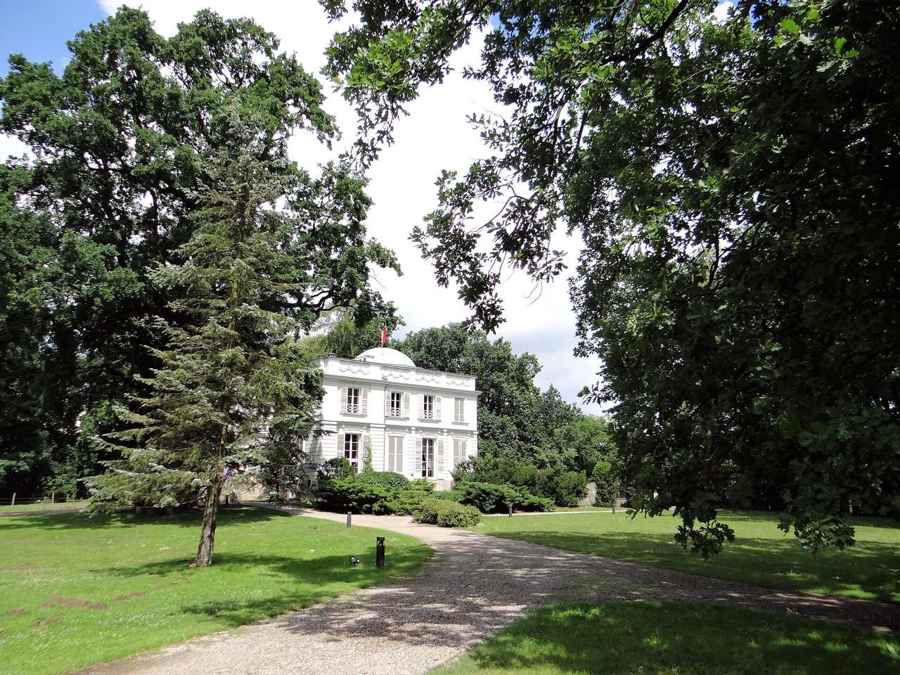
Photo: Jolanta Dyr, Wikimedia Commons (CC BY-SA 3.0). the classicist palace in the upper park at Natolin.
From royal menagerie to Romantic park
At the end of the 17th century the Natolin forest was King Jan III Sobieski's menagerie and part of the Wilanow estate; under Augustus II it became a pheasantry, the City of Warsaw recounts. In 1780 Prince August Czartoryski created a rustic summer residence here and built a classicist palace on the Vistula escarpment overlooking the forest below. The estate passed to his granddaughter Aleksandra of the Potocki family, and when her granddaughter Natalia was born in 1807, the residence was named Natolin in her honour. Around that time the forest was reshaped into a fashionable Romantic landscape park.
What survives
Per the city, the historic composition still shows the main visual axis linking the palace and the Moorish gate, the circuit avenue and the park structures: the Doric temple (a garden pavilion), an aqueduct, the Moorish bridge and the mausoleum of Natalia, who died young. The ensemble was entered in the register of monuments in July 1965 under number 647 and lies within the Wilanow Cultural Park.
A forest left alone
Left largely untended for nearly two centuries, the lower park grew into a natural forest whose biodiversity the city compares to the Bialowieza Primeval Forest - an oddity at least on the European scale. In 1991 part of the park became the Las Natolinski nature reserve. The upper park covers 20 hectares around the palace; the lower park, 17 metres below, spreads over more than 100 hectares.
Visiting
Since 1994 the ensemble has been administered by the Natolin European Centre Foundation, which adapted the palace buildings for the College of Europe, an international university. The grounds are not a public park in the everyday sense: per the city, the beauty of the place can be admired in organised groups with a guide.
FAQ
Can you visit the Natolin park in Warsaw freely?
Not exactly. Per the City of Warsaw, the ensemble can be viewed in organised groups with a guide. The palace grounds host the College of Europe campus, and part of the lower park is the Las Natolinski nature reserve.
Why is it called Natolin?
The residence was named after Natalia Potocka, born in 1807, granddaughter of Aleksandra of the Czartoryski family, per the City of Warsaw.
What monuments survive in the Natolin park?
Per the city: the classicist palace, the Doric temple pavilion, an aqueduct, the Moorish bridge, the mausoleum of Natalia and the Moorish gate, plus farm buildings. The ensemble is listed in the monuments register under number 647 (1965).
Sources
Follow Warsaw Daily on Instagram
Daily Warsaw news, events, concerts and city tips in English: @warsawdailynews
Related articles
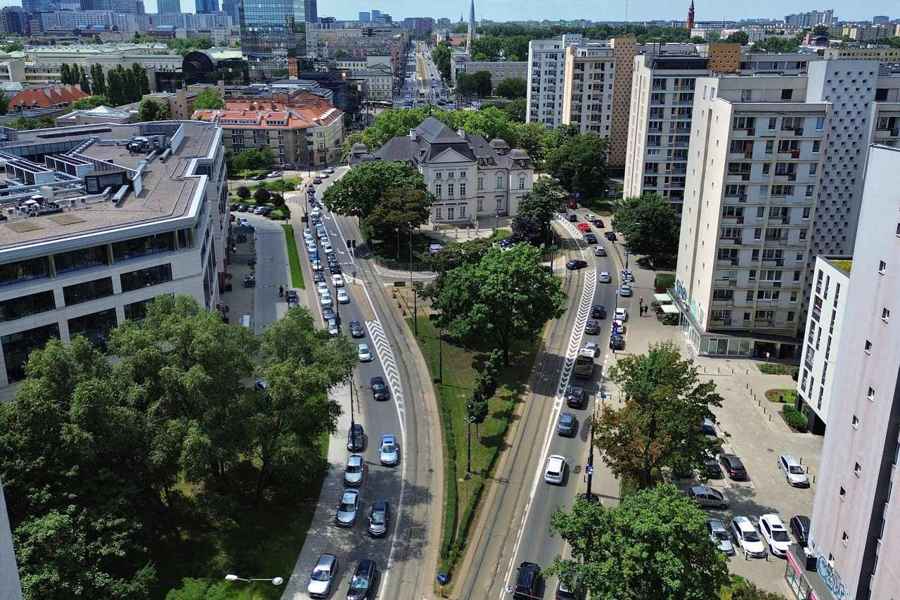
Museum of Independence Warsaw: Hours, Tickets and Branches
The Muzeum Niepodleglosci tells the story of Poland's road to independence from five Warsaw locations. Current opening hours, ticket prices and free-admission Thursdays, per the museum.
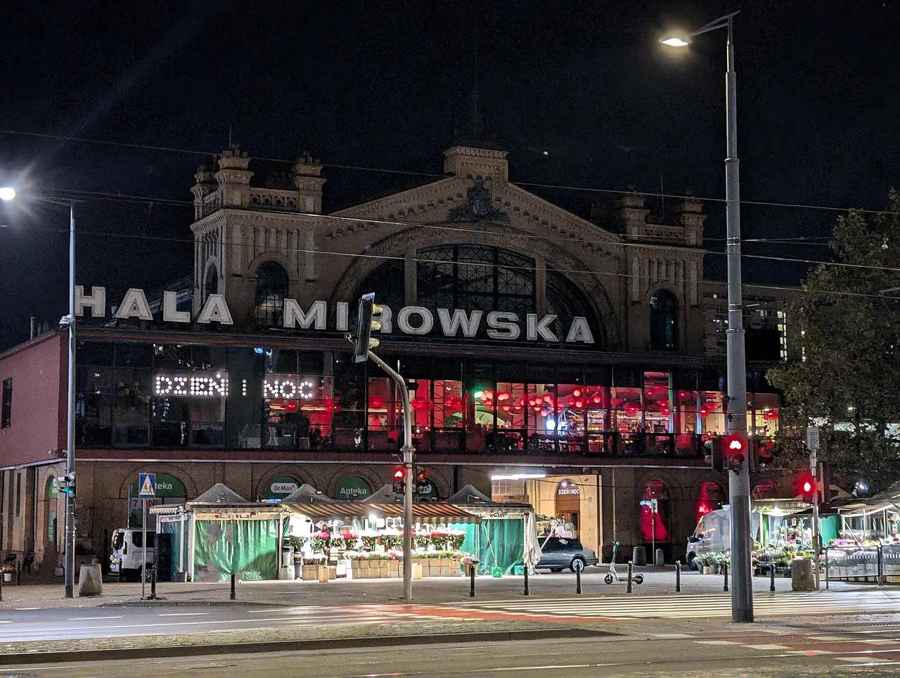
Hala Mirowska: Warsaw's Historic Market Hall on Plac Mirowski
Twin market halls raised at the turn of the 20th century, rebuilt after the war and protected as a monument since 1986. The history of Warsaw's most famous market, per the city.
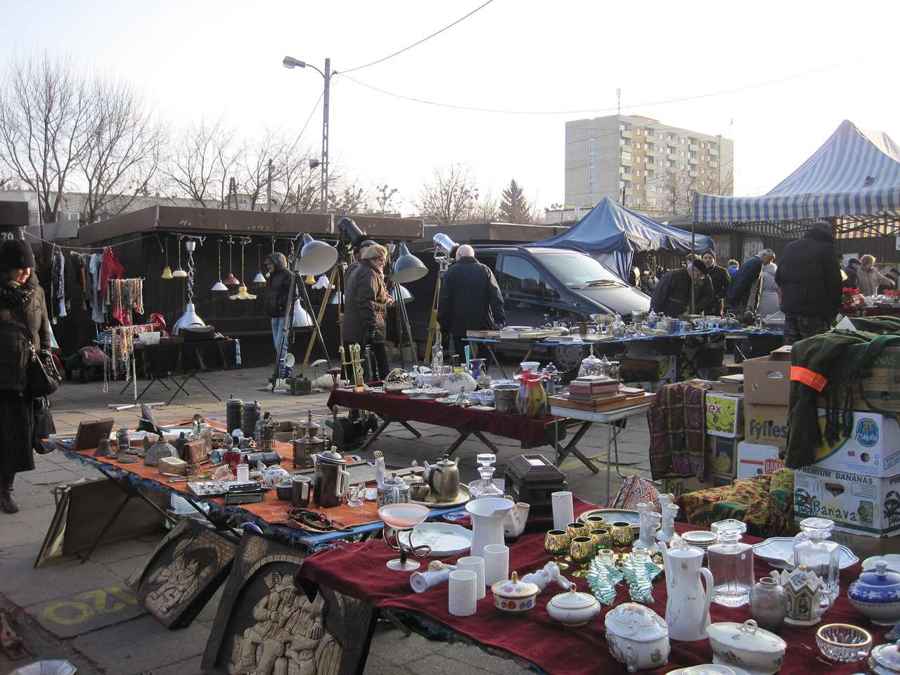
Bazar na Kole: Warsaw's Sunday Antiques Market on Obozowa
Farmers on Tuesdays and Fridays, antiques and bric-a-brac on Sundays - the Wola bazaar where collectors, dealers and strollers hunt for lamps, ceramics and old clocks. Per the City of Warsaw.